Swing Voters Split on Trump as Midterm Ballots Near
NPR's long-term project finds that while some backers remain loyal, others are abandoning the president's party due to economic and war concerns.
By Hugo Konate ·

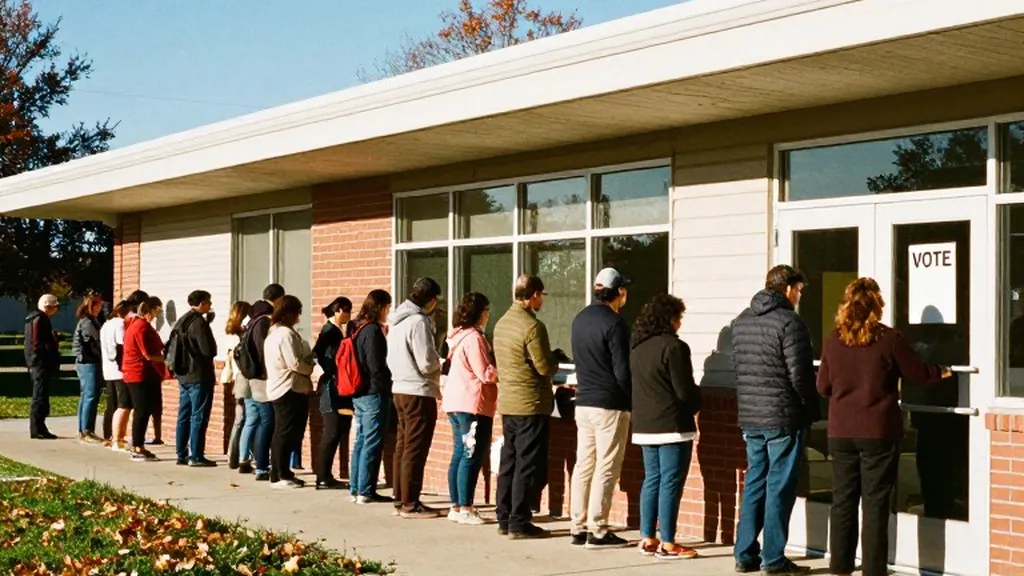
Midterm elections typically serve as a referendum on the sitting president, yet the path from presidential approval to specific ballot choices remains complex. A long-term reporting project by NPR has tracked a group of swing voters in key states who supported Donald Trump in the 2024 election. As Election Day approaches in 2026, their shifting opinions reveal the fragility of the Republican coalition nearly two years into Trump's second term.
Gerald, a Georgia voter, represents the loyal wing of this base. He gave Trump an A+++ and cast his early ballot for Republican candidates Mike Collins for Senate and Rick Jackson for governor. Gerald described his strategy as "red all the way down the ballot," noting that he wrote in his own name for one unopposed Democratic seat because he refused to give a Democrat his vote.
In contrast, Wally, another Georgia voter who supported Trump in 2024, has given the president an F in every survey since March. He cited inflation as his primary concern and voted early for Democratic Senate incumbent Jon Ossoff and gubernatorial candidate Keisha Lance Bottoms. Wally characterized his vote as a rejection of both the current administration and the political establishment, stating he views congressional leaders as "essentially stealing money from the American public."
The broader group of eleven swing voters used terms such as "messy," "divided," and "scary" to describe their feelings about the nation. Only two of the eleven reported being happy with Trump's performance. Theresa, a Pennsylvania voter who switched from Biden in 2020 to Trump in 2024, assigned the president a C-. She cited the duration of the war in Iran as the main reason, noting that Trump had predicted a conflict lasting only a few weeks.
Lee, a Nevada voter and one of the two satisfied with Trump's second term, still expressed concern about the war. He gave the president an A- but noted the conflict was taking "kind of long." Lee's personal economic outlook improved after he secured a new job, a change that made him more Republican and more suspicious of Democrats. Conversely, Quintero, also from Nevada, plans to swing back to the Democrats in this year's midterms.
The disconnect between presidential approval and ticket voting is evident in Pennsylvania. Three of four Pennsylvania swing voters who backed Trump in 2024 now plan to support Democratic Governor Josh Shapiro for re-election. Theresa said she is sticking with Shapiro because he is a familiar politician. Stephen, living in the competitive Pennsylvania 1st Congressional District, plans to re-elect Republican Representative Brian Fitzpatrick but will vote for Shapiro at the top of the ticket.
John, a voter from Philadelphia, is the sole exception in the group, voting for the Republican candidate in the governor's race. He described the country as "teetering" and expressed anxiety over the prospect of Democratic control. John predicted that a shift in Congress would lead to investigations, impeachment talk, and gridlock in Washington, concerns that influenced his choice at the top of the ballot.
The data suggests that the Trump 2024 base is not a monolithic voting bloc for 2026. While some voters remain firmly aligned with the president, others are prioritizing specific policy grievances, such as the Iran war and energy prices, over party loyalty. This split indicates that the translation of presidential sentiment into legislative votes will vary significantly by state and candidate.
Source: KPBS