The $1 Trillion Dividend: Trump's New Mandate for AI Data Centers
The President is pushing a policy that requires hyperscalers to compensate local residents for energy costs, aiming to quell growing opposition to massive facility construction.
By Miguel Hernandez ·
The fight over who pays the electric bill for the artificial intelligence boom is reaching a fever pitch.
President Donald Trump has issued a directive demanding that data center builders and AI hyperscalers provide financial dividends to the communities hosting their facilities. In a post on Truth Social on October 21, 2026, the President outlined a strategy to make these industrial giants more acceptable to local populations. The core of the proposal is that companies must not only generate their own electricity, as previously ordered by the administration, but also return or sell excess power back to the grid for the benefit of nearby residents.
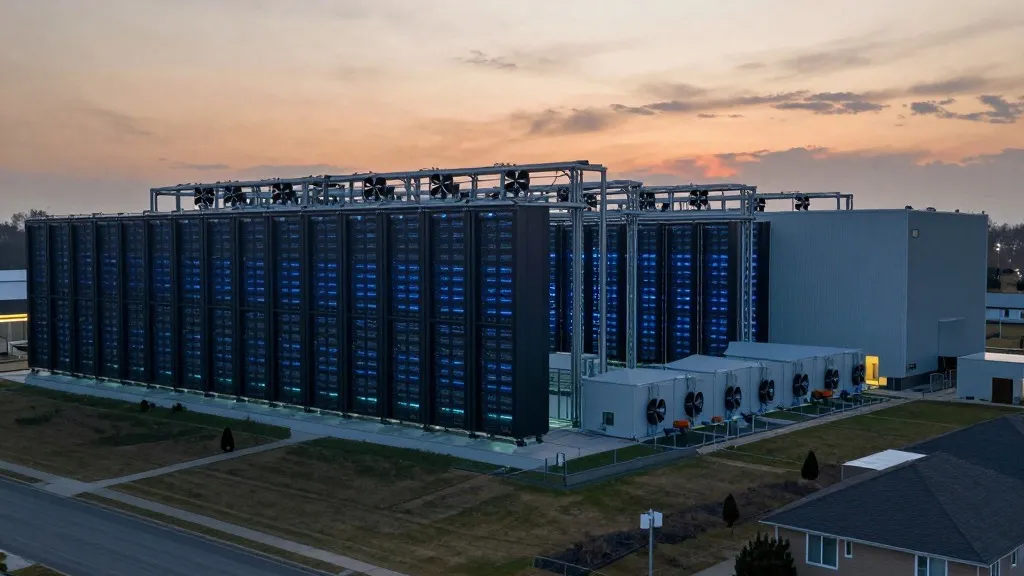
This move comes as local opposition to AI infrastructure intensifies across the United States. Small towns and rural areas have increasingly protested the arrival of large-scale data centers, citing a host of environmental and economic burdens. Residents frequently complain about rising utility rates, persistent noise from cooling systems and generators, and significant impacts on local water supplies and air quality. The administration believes that by mandating a financial return to these communities, it can mitigate the most visible pain point: the spike in electricity prices that often accompanies the massive energy draw of AI operations.
The policy is also driven by a strategic desire to maintain America’s lead in the global AI race against China. By smoothing over local friction, the White House hopes to accelerate the construction of new facilities. The administration has already pushed legislation requiring data centers to cover the costs of necessary grid upgrades, preventing those expenses from being passed on to local taxpayes. The new dividend proposal builds on this framework, suggesting that excess power generated by the facilities could be used to lower costs for neighbors, effectively turning a source of resentment into a community benefit.
In his social media post, Trump emphasized the economic incentives for local acceptance. He noted that data centers, which are often viewed with suspicion, become far more welcome when a financial deal is struck. The President urged stakeholders to “MAKE DEALS, and get them built!!!” signaling a strong preference for rapid expansion over prolonged negotiation. The language suggests a pragmatic approach: if the money flows to the community, the political resistance should fade.
However, experts and observers remain cautious about the practicality of the mandate. The term “dividend” implies a distribution of profits, which raises questions about the financial health of new data center projects that are often in a capital-intensive construction phase. Furthermore, the nature of the energy generated matters. Many of these facilities rely on short-term solutions like gas-powered generators, which can be noisy and polluting, potentially offsetting the financial benefit with physical inconvenience for those living in close proximity.
The broader ecological footprint of these centers also remains a challenge. While the energy dividend addresses one facet of the dispute, it does not resolve concerns regarding enormous water consumption, deforestation, and long-term environmental damage. These factors continue to make data centers a difficult sell in many locations, regardless of the financial perks offered.
Whether this mandate will successfully transform the relationship between AI developers and their neighbors remains to be seen. The administration is betting that a direct financial incentive will outweigh the operational nuisances, but the success of the plan depends on how strictly the guidelines are enforced and how effectively the funds are distributed to the affected households.
Source: Tom's Hardware