Southeast Voters Reject Trump Map, Handing Democrats Full Control of Congress
A historic Democratic wave swept the region, flipping Senate seats in South Carolina and North Carolina and securing a 54-seat majority in the upper chamber.
By Hugo Konate ·
Voters across the Southeast delivered a decisive mandate for change on Tuesday, rejecting the political map drawn by President Donald Trump's administration and handing Democrats a sweeping victory in Congress. The results confirm a fundamental shift in power, with the Democratic Party now controlling both the U.S. Senate and the U.S. House of Representatives. For readers in the region, the night marked the end of a brief period of unified Republican control and the beginning of a divided government where local and state leaders will face new federal realities.
In the U.S. Senate, Democrats secured at least 54 of the 100 seats, a majority that was once considered unlikely given the pre-election map. Ballotpedia reported that seven Senate seats changed party hands, all to the Democrats. These flips included historic victories in South Carolina and North Carolina, states that had not sent a Democratic senator to Washington since 1932. The loss of the Senate means Republicans will no longer hold the procedural advantage they have used to confirm judges and pass legislation with fewer obstacles.
The U.S. House of Representatives saw an even more dramatic turnover. Democrats won a net gain of 27 seats, securing a majority well past the 218 votes needed to control the chamber. Ballotpedia data showed Democrats winning 227 of the called House races, compared to 138 for Republicans, with 70 races remaining uncalled as of the latest updates. This margin suggests a robust majority that will allow the new leadership to pass significant legislation without the need for constant bipartisan negotiation on every bill.
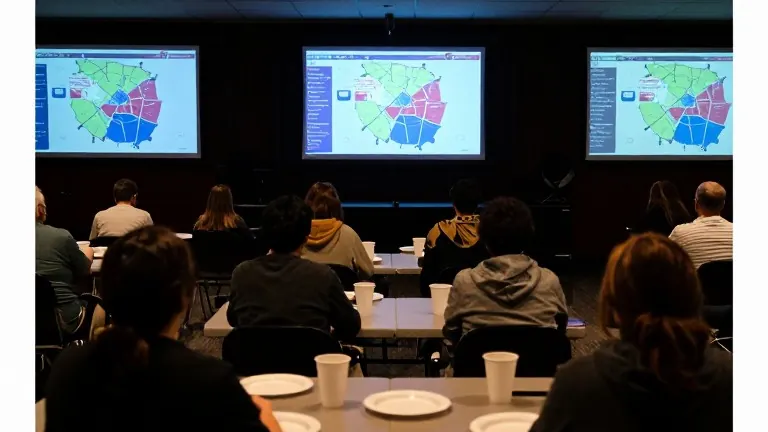
The failure of the Republican redistricting strategy was a defining feature of the night. President Trump had urged Republicans in eight states to redraw congressional boundaries over the past year, aiming to flip specific Democratic-held seats to ensure a House majority. According to the Associated Press, this plan fell flat in the Southeast. In Florida, Democratic Rep. Jared Moskowitz won reelection in a newly drawn district, defying Republican efforts to tilt four seats to the GOP. In Alabama, Democratic Rep. Shomari Figures also won reelection, despite a Supreme Court ruling that allowed the state legislature to adopt a map Republicans viewed as more favorable.
In North Carolina, the redistricting battle led to costly and close races in the eastern part of the state. Republicans had redrew two congressional districts with the goal of unseating Democratic Rep. Don Davis. The advertising battle for his seat in the 1st Congressional District cost well over $50 million, according to the ad tracking firm AdImpact. Davis held a slight lead Tuesday night, signaling that the heavy spending did not secure the flip Republicans sought. The expense highlighted the desperation of the GOP strategy to hold onto the House.
The governor's race in Georgia, an open seat, was among the battlegrounds identified by Ballotpedia. The state also held a Senate race with incumbent Jon Ossoff on the ballot. While specific results for the Georgia governor's office were not yet finalized in the early morning counts, the broader trend in the state mirrored the national wave. Democrats are projected to gain control of the state's top executive office, which would be a significant shift in the state's political balance. The Georgia insurance commissioner election was won by Keisha Sean Waites, marking the first time since 2016 that the office changed partisan hands.
In Florida, the absence of a Senate race allowed voters to focus on the House and the open governor's seat. The state's political landscape shifted as Democrats retained seats in districts that Republicans had attempted to reshape. The Associated Press noted that in all but one of the revamped districts across the country, Trump would have carried over 54% of the vote had they been in place for the 2024 election. However, shifting viewpoints of the president undercut these presumed safe Republican districts, leading to unexpected losses in the state's congressional delegation.
The economic concerns of Southeast voters were central to their decision to vote Democratic. The AP Voter Poll found that about 6 in 10 voters disapproved of how Trump is handling the presidency. Views of his priorities were mostly negative, with many voters citing the high cost of living and the war with Iran as key reasons for their vote. In the Southeast, where fuel prices and grocery costs have been a source of frustration, this dissatisfaction translated into a rejection of the president's party. The war in Iran, which has sent fuel prices soaring, was cited by about 6 in 10 voters as the wrong decision, and this sentiment was particularly strong among those who voted for Democratic House candidates.
The outcome in the Southeast will have immediate implications for state and federal relations. With Democrats controlling both chambers of Congress, the new leadership has signaled a focus on lowering the costs of gas, groceries, and other goods. House Democratic Leader Hakeem Jeffries, who is expected to become the first Black speaker of the House, vowed to deliver on the dramatic change that voters deserve. This shift means that federal policies affecting the Southeast, from energy infrastructure to healthcare funding, will be shaped by a Democratic majority that is eager to reverse course after two years of unified GOP control.
For Republican leaders in the region, the night brought a reckoning. The party's failure to hold onto the Senate in states like South Carolina and North Carolina, long considered Republican strongholds, underscores the depth of voter anger. The Associated Press reported that in losing Ohio, Iowa, Maine, and North Carolina, majorities of voters said the Republican Senate candidates were too supportive of the unpopular president. This finding suggests that the personal brand of the president, rather than the specific candidates or local issues, was a drag on Republican performance across the Southeast and the nation.