Johnson's Warning: A Democratic House Means 'Chaos Every Day' and a 'Dark Harbinger' of France
House Speaker Mike Johnson is using his own words from recent op-eds and interviews to define the stakes for the final two years of the Trump administration.
By Jason Cooper ·

House Speaker Mike Johnson is spending the final days before the November 3 election warning that a shift in the House of Representatives would bring a period of intense legislative conflict. In a USA Today op-ed published on October 30, Johnson argued that even a narrow Democratic majority would be controlled by the far-left wing of the party. He specifically pointed to France as a dark harbinger of where such a shift could lead in the United States.
Johnson’s message is urgent and pointed. He told viewers on Fox News’ The Ingraham Angle that if Democrats take control, it will be chaos every day for two years in the next Congress. He emphasized that the current Republican majority is one of the smallest in history, making every single vote critical. He noted that in 2024, ten House races were decided by 6,000 votes or less, a margin that underscores the fragility of the current balance of power.
The Speaker also addressed the concept of a Democratic House being held hostage by the DSA, or the Democratic Socialists of America. He wrote that the party has bent the knee to its far-left wing, creating a dynamic where centrist Democrats are forced to align with more radical positions. This theme was reinforced in his interview on Fox and Friends, where he described the current Democratic platform as a harbinger of what is to come, contrasting it with the common-sense policies of the Republican agenda.
Johnson’s warnings come as he highlights the specific achievements of the 119th Congress. He claims House Republicans delivered $4.6 trillion in lower taxes, which he describes as the largest middle- and working-class tax cut in history. He also points to a $1.6 trillion reduction in wasteful government spending and the creation of the first-ever nationwide school choice program. These figures are central to his argument that the Republican record is one of delivery rather than rhetoric.
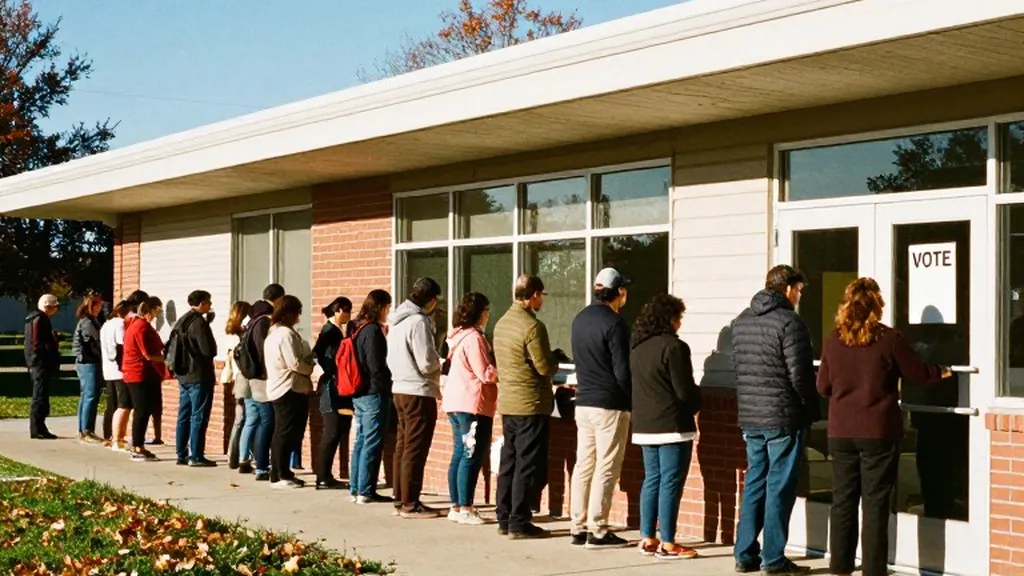
In the Southeast, voters are weighing these claims against their own economic experiences. Polls in the region are open, with Georgia and Florida both voting from 7 a.m. to 7 p.m. local time. North Carolina polls open at 6:30 a.m. and close at 7:30 p.m. South Carolina and Mississippi also have polls open from 7 a.m. to 7 p.m. Tennessee poll hours vary by county, while Alabama follows the 7 a.m. to 7 p.m. schedule. These timing differences affect how early voters can cast their ballots in these critical states.
Johnson has been traveling nonstop to campaign for this record. He stated on Fox and Friends that he visited more than 40 districts across 22 states in the last month. He described the election as a contrast between common sense and crazy, urging voters to look at the record of results. He specifically mentioned the Working Families Tax Cut, which he says provided an average $10,900 boost in take-home pay for a family of four through provisions like no tax on tips and overtime.
The Speaker also addressed the potential for retribution if the other party wins. He warned that an angry Democratic Congress would go after the Trump administration, trying to open the borders and repeal tax cuts. He framed this as a choice between building on the foundations of the nation or tearing them down, a dichotomy he explored extensively in his USA Today piece. He emphasized that the framers understood the need for individual liberty and limited government, principles he believes the current Democratic Party is dismantling.
Republican leaders across the country are echoing Johnson’s message. Newt Gingrich, former Speaker of the House, praised Johnson for his patience and discipline in navigating a divided conference. He said Johnson created a record for legislative effectiveness that is historic. Kevin Roberts of the Heritage Foundation also commended Johnson for delivering consequential conservative policy victories through some of the slimmest congressional majorities in history.
Johnson’s focus on the DSA and the French example serves to frame the stakes beyond a simple partisan switch. He suggests that the internal dynamics of the Democratic Party will dictate its actions in Congress, potentially leading to a more radical legislative agenda than seen in previous years. This narrative is designed to mobilize Republican voters who may be undecided or leaning toward the opposition.
As voters head to the polls, the debate centers on whether the Republican record of tax cuts and spending reductions justifies maintaining their majority. Johnson’s specific use of terms like chaos and hostage captures the intensity of the campaign’s final stretch. The outcome will determine who controls the legislative agenda for the remainder of the president’s second term, with significant implications for the nation's economic and social policies.
The election is seen as a referendum on the administration’s performance. While approval ratings are a factor, Johnson argues that the tangible results of the past three years are the primary metric. He continues to campaign with a focus on the contrast between the two parties, urging voters to choose the path of stability and growth over the uncertainty of a new majority.