Iran Destroyed Billions in U.S. Assets
Satellite analysis reveals a coordinated strategy targeting early-warning radars before striking housing and hangars across 26 bases.
By Hugo Konate ·
Iran executed a methodical campaign against American military infrastructure in the Middle East, prioritizing the destruction of early-warning systems before expanding its strikes to aircraft and troop facilities. An Associated Press analysis of satellite imagery and interviews with regional officials detailed this two-stage approach across the theater of operations. The findings indicate that Tehran sought to blind U.S. defenses to facilitate subsequent attacks on high-value equipment and living quarters.
The AP verified damage on 26 military bases and other sites containing U.S. equipment through August. More than 115 drone or missile strikes, claimed by Iran or its allied militias, caused billions of dollars in damage during the eight-month conflict. The heaviest concentration of attacks occurred in Kuwait, though strikes also registered in Bahrain, Iraq, Jordan, Oman, Qatar, Saudi Arabia, and the United Arab Emirates.
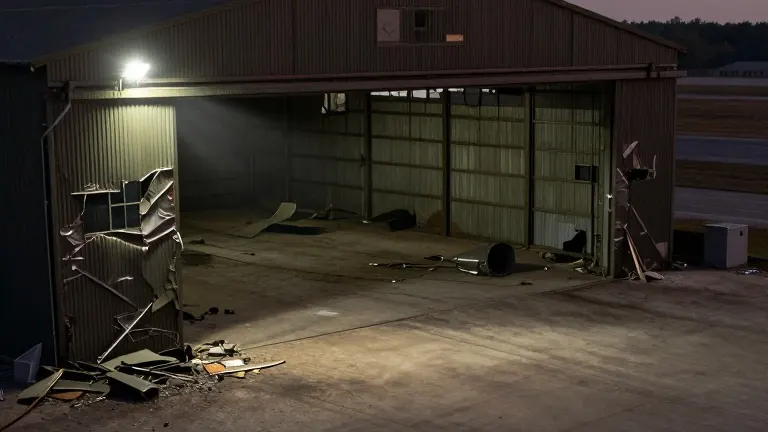
Ali Al Salem Air Base in Kuwait absorbed at least 30 separate impacts. These strikes damaged or destroyed 15 aircraft hangars, numerous warehouses, and 10 buildings near a residential area. Camp Buehring in Kuwait suffered comparable losses, with most hangars rendered inoperable. A gym was destroyed in March, and a troop store was hit in late July. A separate strike severely damaged the base garage and dining room, according to two regional officials who spoke on condition of anonymity.
The initial phase of the war focused on radar systems designed to detect incoming threats. Within the first two days of hostilities in late February, Iran destroyed enclosures protecting U.S. radar units at Camp Arifjan in Kuwait and Naval Support Activity Bahrain. Portable radars at Prince Sultan Air Base in Saudi Arabia and Muwaffaq Salti Air Base in Jordan were also targeted. N.R. Jenzen-Jones, director of Armament Research Services, noted that these strikes aimed to degrade the ability of the U.S. and its allies to respond to further attacks.
One radar in Jordan was destroyed, representing one of only 13 units of its type possessed by the U.S. Army globally. Raytheon, the manufacturer, stated that each unit costs approximately $500 million. Another radar in Qatar was damaged significantly. That system, part of a 2013 deal valued at $1.1 billion, appears to have been the only one of its kind in the region.
After blinding the early-warning networks, Iran launched more than 50 successful strikes on 18 locations with U.S. equipment in the first month. Targets included refueling aircraft, communication systems, fuel bunkers, and troop accommodations. A strike on Prince Sultan Air Base in March damaged the rear section of a Boeing E-3 Sentry surveillance aircraft. Another hit a CIA unit at the U.S. Embassy in Riyadh. A Congressional Research Service report updated in October confirmed that 15 U.S. aircraft had been damaged on regional bases.
U.S. Central Command declined to specify the extent of damage, citing operational security. Pentagon spokesman Sean Parnell stated that forces and bases remain well protected and that service members have everything needed for their mission. Two regional officials said the U.S. has moved many assets, including aircraft and air defense systems, out of the Persian Gulf. Raphael Cohen, director of the National Security Program at the RAND School of Public Policy, described the losses as a wake-up call for fixed infrastructure in modern warfare.
Source: HuffPost