Sixty-nine dead in Toledo train crash after signal system fails
A breakdown in the LZB monitoring system forced manual control of 39 miles of track, leading to a collision between two trains on the Madrid-Seville line.
By Hugo Konate ·
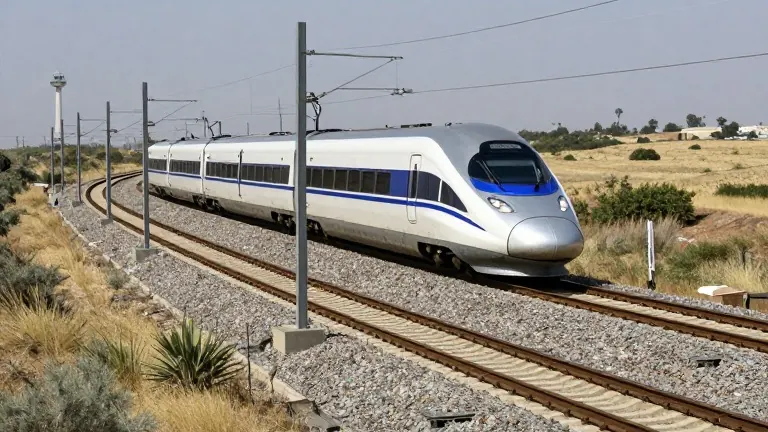
Sixty-nine people died in a train collision in Toledo province on Wednesday, the deadliest rail accident in Spain since a similar crash in January. The impact occurred on the high-speed line connecting Madrid and Seville.
The government timeline indicates that the disaster began at 8:30 a.m. when the LZB communication system failed. This system normally monitors train positions and can trigger automatic brakes. When it went offline, human controllers in Madrid assumed responsibility for a 63-kilometer stretch of track. Authorities estimate that six trains were on that section at the time.
By 8:36 a.m., a controller instructed a state-owned RENFE train to resume normal speed. Fifteen miles further down the line, a privately operated IRYO train attempted to restart but could not override its automatic stop. The engineer reported the issue to the control post. At 8:53 a.m., the two trains collided, derailing carriages and scattering debris.
Transport Minister Oscar Puente blamed the incident on a controller's judgment. He described the decision to allow the RENFE train to move as erroneous because a red stop signal was still active. Puente called the circumstances of the decision inexplicable. He is currently under pressure to resign from his post.
Railway unions disagree with the minister's assessment. Raquel Ayllon, spokesperson for the SCF union of traffic controllers, argued that the controller was working under poor conditions with insufficient staff. She stated that human error is understandable given the context, but the repeated failure of the safety system is not.
Diego Martin, a spokesperson for the SEMAF union of train engineers, noted that the three-decade-old LZB system has failed previously. The system is currently being phased out but remains in use on this line. Martin said the system should have been replaced earlier.
Train workers went on strike on Thursday in a planned action. They are demanding that the government meet its promises to improve safety conditions following the January crash, which killed 46 people. Union representatives also criticized media outlets for leaking audio recordings of conversations between the control room and train engineers.
Spain opened its high-speed rail network to private operators in 2021. Both of this year's crashes involved a RENFE train and an IRYO train. According to SCF data, the average number of daily trips between Madrid and Barcelona rose from 56 in 2019 to 89 in 2024. Union leader Joan Rodriguez stated that the increase in traffic from liberalization has strained the network, though he did not call it the sole cause of the accidents.
A judge and a special government commission are conducting separate investigations into the Toledo crash. Prime Minister Pedro Sanchez has pledged to determine the full scope of the failure. King Felipe VI visited injured passengers in a hospital in Toledo on Thursday. He said measures would be taken to prevent such a catastrophe from happening again.
Source: MySA