Illegal Miners Drain Water Reserves at West Johannesburg Animal Charity
Dozens of zama zamas arrived near a local animal welfare charity in late September, depleting its water supply while police struggle to manage the growing underground workforce.
By Jason Cooper ·
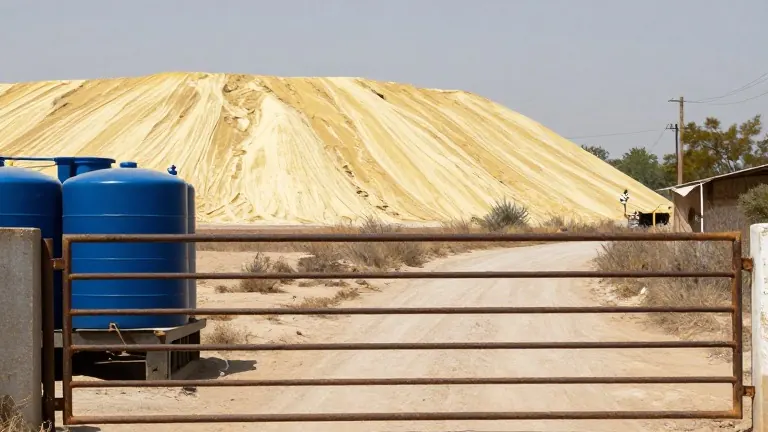
Cora Bailey, a veterinarian who has worked in the townships around Roodepoort since 1991, watched the number of illegal miners surge as gold prices climbed. In late September, dozens of zama zamas set up camp on the dirt road adjacent to her charity, Claw. The group began drawing water from the organization's two 25,000-litre tanks, which are supplied irregularly by the city government to support the 100 rescued and injured animals on site.
By mid-October, the situation had become critical. Bailey stated that the charity had previously always offered water to the miners. However, the group had consumed nearly the entire reserve. Bailey closed the gate at 12:00 midday because the tanks contained only two buckets of water. Police informed her that the scale of the operation was too large for them to handle effectively. A week later, officers cut back the grass that had concealed the miners. A smaller group returned within days, but Bailey reported they were now limiting their use of the water to drinking.
South African police frequently report successes in curbing illegal mining. On 19 October, authorities announced the arrest of 71 suspected zama zamas across the country in the preceding week. Researchers estimate the total number of illegal miners in the tens of thousands. In 2019, Marcena Hunter, a researcher at the Global Initiative against Transnational Organised Crime, calculated that 10% of South Africa's gold production, valued at approximately $1 billion, was exported illegally.
Police tactics have sometimes resulted in severe losses. In 2025, 93 bodies were recovered from a mine shaft in Stilfontein after officers blocked food and water deliveries to the underground crew. The drivers of this activity include high gold prices, poverty, unemployment, and corruption among politicians and police. Mining companies also fail to meet their legal requirement to seal shafts upon ceasing operations.
Johannesburg was founded after gold was discovered on a farm in 1884. The city's gold production peaked in the 1970s. South Africa held the title of the world's largest gold producer for over a century until 2007. Morris Viljoen, a geology professor at the University of the Witwatersrand, estimated in 2009 that the local reef had produced more than one-third of the gold ever mined globally. Claw operates from the former offices of the Durban Deep mine, which closed at the start of the century.
The city government claims 40,000 tonnes of gold remain underground in the region. Recovering this metal becomes more expensive as deposits lie deeper. Gwede Mantashe, the mining minister, told parliament in 2025 that there were 6,100 derelict and ownerless mines and 1,170 unsafe mine openings. Illegal miners have filled these voids. Experts agree that most zama zamas come from neighboring countries, primarily Lesotho, Mozambique, and Zimbabwe.
The ground south of Johannesburg is increasingly unstable. Politicians preparing for local elections on 4 November are blaming illegal miners for the resulting sinkholes. In May, Kenny Kunene, the Johannesburg council member for transport, led journalists to Wemmer Pan Road. He pointed to a collapsed section of the road, identifying it as a fault of the zama zamas. The road, once a main link between the central business district and the south-eastern suburbs, has disappeared in places, leaving raw earth pitted with digging holes.
Experts argue that illegal miners are being made scapegoats. Rosalind Morris, an anthropology professor at Columbia University, noted that the porous dolomitic rock beneath Johannesburg becomes unstable when water is removed. She stated that formal industrial mining, which removes hundreds of millions of gallons of water daily, is the primary cause of sinkholes. While intense illegal mining in areas with residual gold does contribute to structural collapse, Morris called the idea that zama zamas invented the problem fallacious.
Zama zamas are also frequently blamed for violence in mining areas, such as a mass shooting in Wedela township in September. David van Wyk, lead researcher at Bench Marks Foundation, attributed the violence to feuding gangs that control access to shafts. He described the miners as super-exploited cheap labor who do not carry guns. The gang leaders who take the gold remain on the surface.
In Khutsong, 80 kilometers west of Johannesburg, illegal mining keeps the local economy alive. Vusi Cele, a youth secretary for Mining Affected Communities United in Action, said the township would become a ghost town without the rents paid by miners. Cele, 33, currently sells mobile phone accessories above ground. He said he would mine if he could secure a license, noting that surface work yields little profit compared to the money found underground.
Source: The Guardian