Sánchez Farm Sells 2 Million Marigolds to Meet Growing Demand in Florida
A Plant City operation expanded from one acre to seven, supplying wholesale buyers across the Southeast while hosting cultural festivals.
By Hugo Konate ·
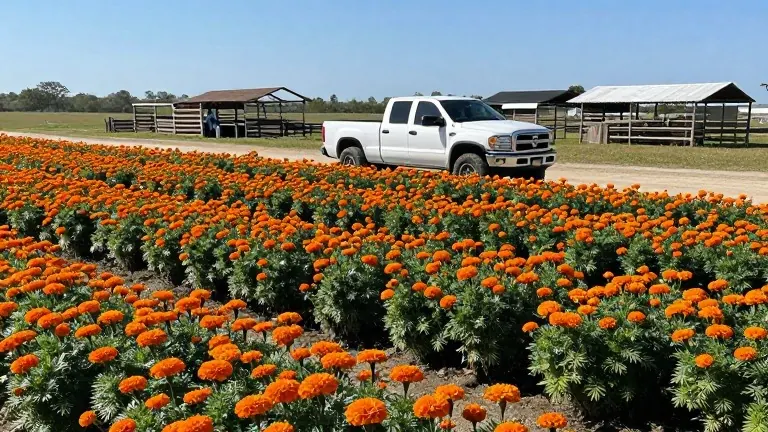
The Sánchez Farm in Plant City now produces approximately 2 million cempasúchil flowers per season, a volume that has attracted wholesale buyers from as far away as Atlanta.
Carolina López and her husband Fidel began growing Mexican marigolds in 2019 after struggling to find the specific blooms needed for Day of the Dead altars in their new home. The couple used savings to dedicate one acre to the crop, but the first year resulted in the loss of half the plants due to trial and error in irrigation and soil preparation.
By 2020, the family shifted from personal use to commercial sales. They loaded a pickup truck with the first harvest and sold out by 9 a.m., repeating the process until three full truckloads were sold. This immediate sell-out confirmed a gap in the local market that was not being addressed by other growers. The farm has since expanded to seven acres, with the Atlanta market purchasing the largest share of the current output.
Carlos López, who has managed sales at the farm since 2021, estimates the annual production weight at 16 to 24 metric tons, based on an average flower weight of 8 to 12 grams. During the peak season, the farm employs about 60 workers, most of whom are Hispanic, to handle the increased volume of visitors and wholesale orders.
The business model has evolved beyond simple flower sales to include a seasonal festival that features food stalls, handicrafts, horse exhibitions, and traditional Mexican rodeo events. Preparation for this season begins in August, involving four months of soil conditioning, irrigation upgrades, and sowing. The operation serves not only the Mexican community but also families from Guatemala and El Salvador who maintain similar traditions for honoring the deceased.
Iván Pliego, the Mexican consul in Orlando, visited the farm to discuss the cultural and economic impact of the operation. He noted that the cempasúchil, with its orange hue, has pre-Hispanic roots as a symbol of guidance for the dead. Pliego stated that the growth of such businesses reflects the presence of Latin American communities in Florida and expressed a commitment to providing consular support to help these enterprises access new opportunities.
The farm’s expansion illustrates how specific cultural needs can drive agricultural growth in new regions. What began as a family project to preserve a tradition has become a multi-state supply chain, connecting local growers to distant markets while providing a gathering place for immigrant communities in Central Florida.
Source: Tampa Bay Newspapers
More Business · Bad Business · Report a business · Got a Story?