Pew data shows 60% of US voters occupy a messy political middle
Researchers argue that social media and elite rhetoric exaggerate partisan divides, while new data reveals deep overlap between Democrats and Republicans on core values.
By Hugo Konate ·

American voters often avoid political conversation to preserve personal relationships, a habit that distorts their view of national divisions. In January, Shanna Berry and Alma Ong, two friends in their early 50s, declined to discuss the U.S. capture of Venezuela’s former president Nicolas Maduro until pressed by researchers. Both women live in different political worlds. Berry is a retired hairdresser, Air Force veteran, and Christian who supports President Trump. Ong is a Buddhist who grew up in London, moved to the United States in the 1990s, and describes herself as more liberal.
When Berry finally spoke, she said the end of the Venezuelan regime was necessary, though she questioned the legal process and the role of oil interests. She noted that many Venezuelans appeared happy with the outcome. Ong, who initially expected a sharp disagreement, agreed with every point Berry raised. The exchange illustrates a pattern identified by Kristin Laurin, a psychology professor at the University of British Columbia. Laurin states that people overestimate political differences because they avoid discussion, leading to incorrect assumptions about others’ views.
Laurin attributes this perception gap to political elites and social media platforms. She argues that leaders paint opponents as extreme to energize voters, while digital algorithms amplify rage to drive engagement. Laurin says the perceived polarization far outstrips the actual division among the public. Evidence of this overlap appeared in April when former FBI Director James Comey was indicted by the Department of Justice for posting a photo of seashells. The department claimed the image constituted a death threat against the president.
The indictment drew criticism from both sides of the aisle. Jonathan Turley, a constitutional law professor at George Washington University Law School, expressed shock at the focus on shell art. At a restaurant near the Chesapeake Bay in Maryland, both Republicans and Democrats supported Comey’s first amendment rights. Stan Fletcher, a restaurateur who voted for Trump in all three of his elections, said no one should be indicted for their opinion. Fletcher believes 95% of Americans are moderates, arguing that public discourse focuses only on the extremes of both parties.
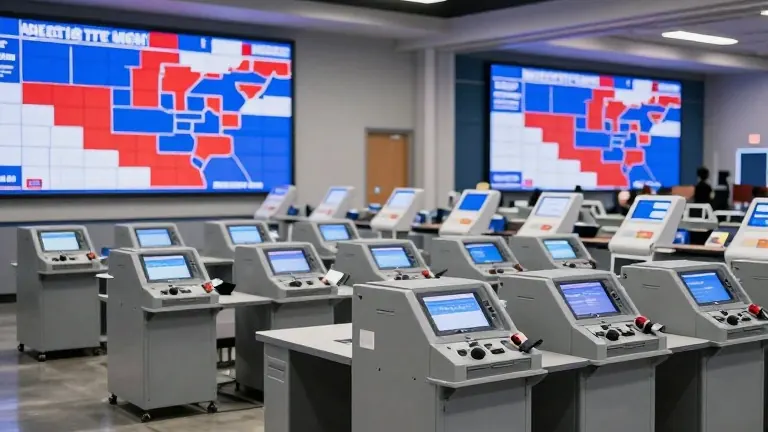
The non-partisan Pew Research Center classifies Americans into nine groups based on values and attitudes. One group, labeled the Pragmatic and Polite Right, consists of 56% Republicans or Republican-leaning voters and 37% Democrats or Democratic-leaning voters. This demographic has the oldest average age, values civility, and holds conservative economic views while remaining moderate on race and immigration. Jocelyn Kiley, who leads politics research at Pew, says looking beneath party labels reveals significant variation and overlap within parties.
Pew estimates that the messy middle accounts for about 60% of the electorate. The groups farthest to the right, including the No Apologies Right and Faith First Conservatives, make up just 21% of the population. Kiley acknowledges that the United States is highly polarized, but she emphasizes the nuance underneath that division. She notes that people agree on more issues than they may realize, despite the loud signals from political elites.
Source: WEPR