Montana court blocks student voting law
A state judge paused a new residency requirement, allowing college students to register locally for the upcoming midterms.
By Allison Singh ·
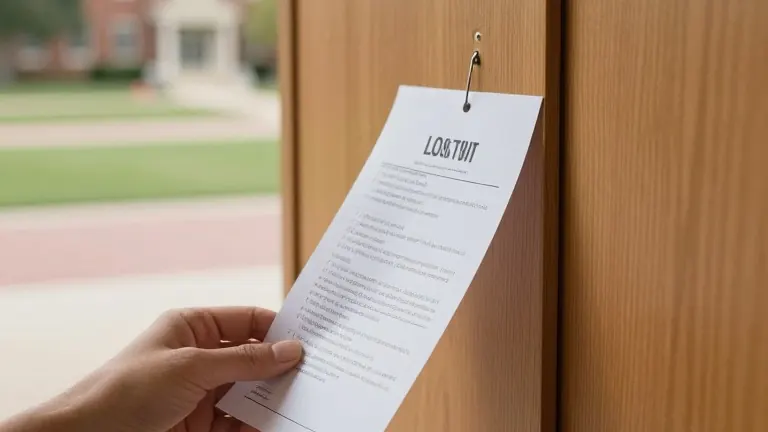
A Montana state judge has blocked a new voter registration restriction, allowing college students to cast ballots in their school communities during the upcoming midterm elections. The interim order keeps the pre-existing rules in effect for the current cycle. The litigation stems from a change enacted by the Republican-controlled state legislature last year. That measure targeted individuals in temporary educational programs. It required such residents to register in a county only if they intended to make that area their permanent home after graduation.
The legal dispute centers on the definition of residency under federal and state law. A 1979 Supreme Court decision established that students may register where they live during the academic year. Yael Bromberg, an attorney and co-editor of Youth Voting Rights, describes domicile as the single, fixed, and permanent principal home where a person intends to return. She notes that determining this status for students with uncertain postgraduation plans is a highly personal assessment. Michael Hanmer, a University of Maryland professor of government and politics, stated that officials cannot hold different groups to different standards. He observed that college students must be treated the same as anyone else new to a location.
State officials argued in court filings that the new law does not cover students at Montana colleges. They contended that the opposite interpretation would render the word temporary meaningless. The filing stated that no one understands obtaining a two, four, or eight-year degree as a temporary endeavor. Missoula County Judge Jason Marks has not accepted that argument. In February, he found the restriction likely violates the Montana constitution. He is now preparing a final ruling in the suit brought by the Montana Public Interest Research Group. The group argues the change could cost thousands of students a voice in local governance.
The current eligibility threshold for Montana voters requires U.S. citizenship, age 18, and 30 days of state residency. The new provision added the intent-to-stay requirement for temporary residents. At a public hearing last year, supporters of the restriction argued that student voters from outside the state should not influence state elections. Hanmer expressed surprise if the restriction survives legal challenge. He advised students to check local rules, as some states require new residents to take extra steps like getting a new state ID or changing car registration. He noted that states impose these steps on all new residents, not just college students.
Source: NPR
More Business · National news · Bad Business · Report a business · Got a Story?