Likud Leads Israeli Vote, But Coalition Math Stalls at 53 Seats
Arab-led parties secure 15% of the vote, forcing Netanyahu and rival Gadi Eisenkot into complex negotiations to reach a majority in the 120-seat Knesset.
By Jason Cooper ·

Prime Minister Benjamin Netanyahu’s Likud party finished as the largest faction in Tuesday’s Israeli election, holding 20.7% of the vote as of Wednesday’s count. Despite leading the tally, the result leaves the government in a state of flux, with no single bloc poised to command a majority in the 120-seat parliament. The outcome has triggered a period of intense negotiation as leaders attempt to assemble a governing coalition before the final results are certified.
The vote share for the major contenders reveals a fragmented political field. Netanyahu’s Likud leads with 20.7%, while centrist challenger Gadi Eisenkot’s Yashar party trails at 16.2%. Arab-led parties collectively captured 15% of the vote, a historic showing that has complicated the path to a majority. Local media projections place Likud and its allies at 53 seats and Yashar and its partners at 48 seats. With 61 seats required to form a government, neither camp holds a clear path to power without additional partners.
Netanyahu has warned against forming a “dangerous government” that includes Arab parties, whose constituents make up 20% of the population. His party has also claimed the election was “stolen” by Arab parties, requesting an investigation from authorities despite a lack of specific evidence. The elections committee noted that reports of irregularities were lower than in previous cycles. Eisenkot, conversely, has left open the possibility of partnering with Arab parties if they recognize Israel as a Jewish state and Hamas as an extremist group, a condition some of his likely allies have not yet accepted.
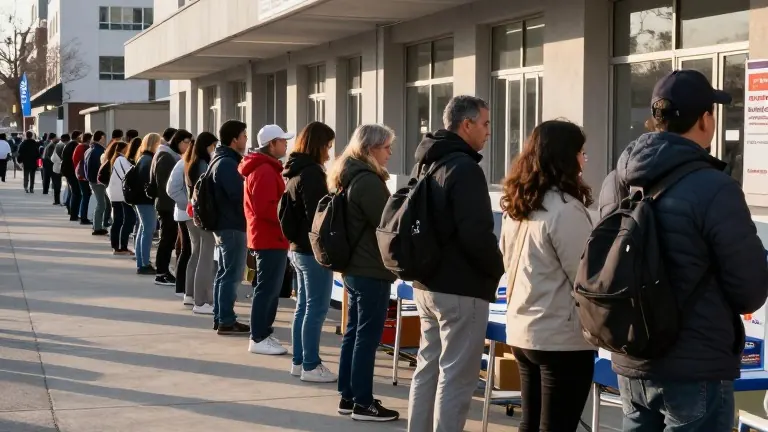
The high turnout and the strength of the Arab vote have intensified debates over national identity. Arab citizens, descendants of Palestinians who remained in Israel after 1948, are often viewed with wariness. Their strong performance forces a reassessment of coalition dynamics. Mansour Abbas, leader of the United Arab List, declared his party is “not on the sidelines.” Hanna Doukhan, a voter in Tel Aviv, stated, “I don’t see a possibility to form a government without the Arabs.” This shift challenges the traditional divide between Jewish and Arab votes in coalition math.
President Isaac Herzog, who has the authority to task a leader with forming a government, urged parties to avoid a repeat election. He said, “We must do everything we can, certainly after yesterday, to avoid another round of elections.” Counting of approximately 500,000 absentee ballots from military personnel and diplomats will continue until Thursday evening. These votes are not expected to shift the overall outcome significantly. If no coalition reaches a majority, new elections could be held early next year, mirroring the five elections held between 2019 and 2022 during a similar stalemate.
Source: MySA