Display Standards: New MacBook Pro adopts 2026 color profile
The laptop becomes the first portable device to use Apple CMF 2026, aiming to solve color perception discrepancies across different screen technologies.
By Hugo Konate ·
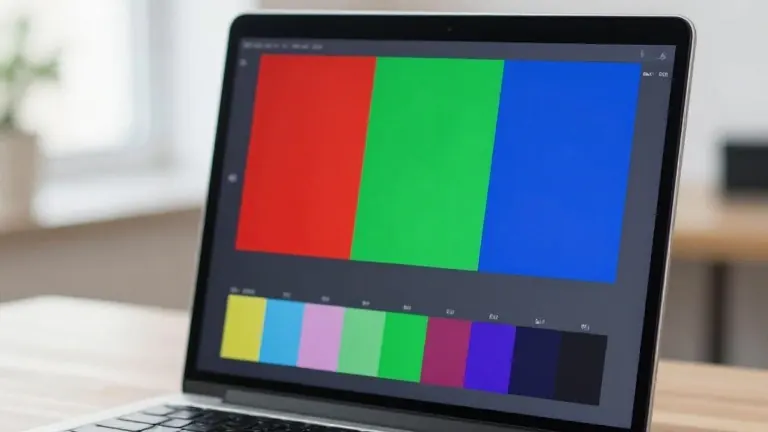
17. This is the number of people who helped establish the CIE 1931 color space standard in 1931. That small sample size created a baseline that has served as the industry standard for nearly a century. Apple now argues that a new standard is needed to handle modern display technologies. The company introduced Apple CMF 2026 to address this gap. This new profile represents how humans perceive color using updated mathematical models.
The latest MacBook Pro is the first laptop to support this technology. It is also only the second product overall to feature the Apple CMF 2026 mode. The first device to include this standard was the Studio Display XDR monitor. Apple states that the new profile helps displays look identical regardless of the underlying hardware. This is particularly important for OLED and quantum dot LED screens.
Modern displays often use ultra-narrow band spectra. These technologies can cause the same image to appear different to different viewers. Human eyes have biological variations, including differences in cone sensitivity. These variations can also change as a person ages. The older CIE 1931 standard does not account for these individual differences. Apple CMF 2026 is designed to mitigate these perceptual shifts.
The new MacBook Pro features a PROLED XDR display. It offers two reference modes built on the Apple CMF 2026 standard. One mode uses P3 color primaries. The other includes both P3 and Adobe RGB color primaries for greater flexibility. The display reaches a peak brightness of 2,000 nits for both HDR and SDR content. This is higher than the 1,000-nit SDR peak on the XDR monitor.
True Tone is active by default on the device. This setting automatically adjusts HDR tone mapping, brightness, and white point based on ambient light. Users can disable this feature through the Displays preferences menu. The laptop also retains compatibility with the older CIE 1931 standard.
There are 14 additional reference color modes available on the new MacBook Pro. These modes use the CIE 1931 color space. Among them is a DICOM profile for medical imaging. The device also supports Apple Pro Display Calibrator. This tool offers three methods for adjusting reference color modes or creating custom profiles. Users can perform a full calibration with measurement gear or fine-tune the display visually.
Apple is working with a CIE technical committee to propose a standard for this new color matching function. The goal is to ensure current display technologies produce consistent results for as many viewers as possible. The base price for the new touchscreen MacBook Pro is $2,900. This is lower than the $3,300 price tag for the Studio Display XDR monitor.
Source: The Verge