Crew Emerges From Mars Simulation
Four volunteers end a 380-day isolation study at Johnson Space Center Saturday.
By Jason Cooper ·
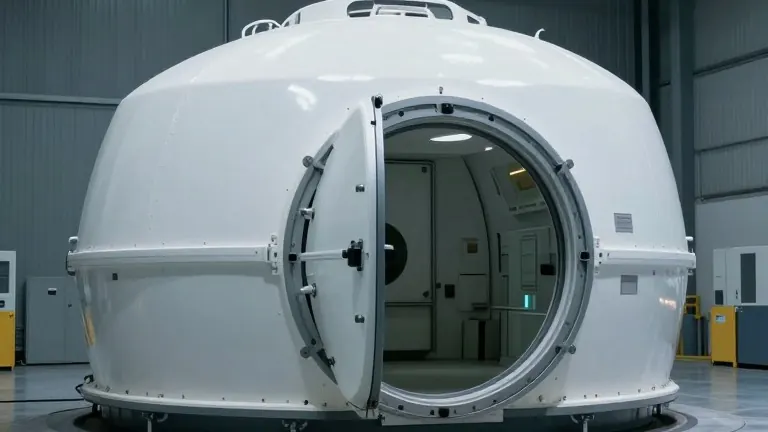
Four volunteers will exit a sealed habitat simulator in Houston on Saturday. They have spent nearly 380 days inside the structure without natural sunlight or contact with their families.
The crew is part of NASA's second CHAPEA mission. They lived in a hangar at the Johnson Space Center to test human endurance in conditions similar to a deep space flight. The study focuses on how isolation and a hostile environment affect personnel.
The group could not give live interviews during the mission due to simulation constraints. NASA released a podcast instead where the four shared their experiences.
Matthew Montgomery, a crew member, noted that the end of the mission was visible. "You can kind of see the finish line coming," Montgomery said.
Ross Elder described the daily routine as extreme camping. "Imagine plopping yourself down in a very remote location with nothing but the items on your back," Elder said. The crew performed simulated spacewalks and tested new technology.
The volunteers managed their own maintenance. They cut their own hair and fixed plumbing issues. They also performed medical checks on themselves.
Ellen Ellis explained the medical protocol. "Routinely, we perform self-blood draw," Ellis said. "We do the blood draw ourselves and a supporting crew member if they need to assist if necessary. We also got practice with an ultrasound probe."
John DeWitt, director of sports science at Rice University and a former NASA scientist, explained the scientific goal. The project examines how volunteers handle three specific hazards: isolation, distance, and a hostile environment.
"I think that's what a lot of the project is going to try and find out is how are the astronauts, or in this case research volunteers, dealing with three hazards that are going to be very important for deep space flight," DeWitt said.
The crew exercised heavily during the mission. DeWitt said this raises a logistical challenge for future space travel. Missions must provide enough food to support high levels of physical activity.
"That's a really big problem that they have to tackle and be ahead of before we actually send people to space," DeWitt said.
The crew expressed excitement about re-entering society. Elder said he misses the sound of weather and busy streets. "I miss the sound of weather, busy streets, and just commotion in general," Elder said. Ellis looked forward to seeing her husband's reaction when the door opens. "Seeing my husband smile at me when the egress door opens," Ellis said. NASA is accepting applications for the next long-term mission, which officials say may help aspiring astronauts gain entry into the program.
Source: KTRK-TV