Teen's Rock Toss Uncovers 3,300-Year-Old Egyptian Seal in Judean Hills
A high school student from America found a Late Bronze Age scarab during a field trip, leading to its immediate preservation by the Israel Antiquities Authority.
By Jason Cooper ·
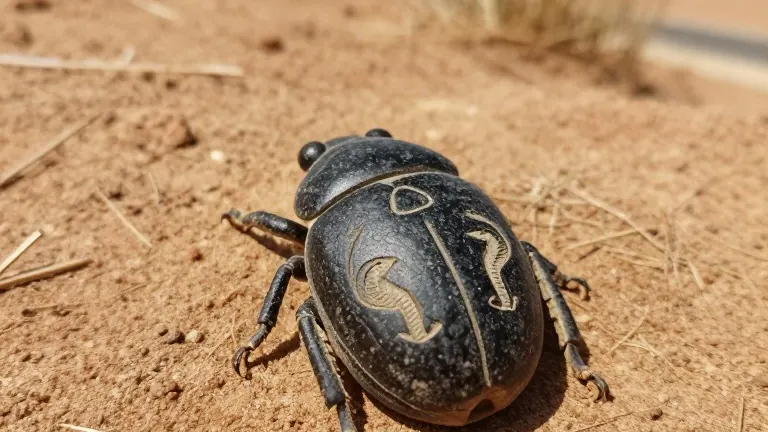
A 17-year-old student from the United States added a piece of ancient history to the National Treasures of Israel on Tuesday. The artifact, a scarab seal from Egypt, is roughly 3,300 years old. It was found in the Judean lowlands during a casual walk up a hillside. The discovery happened while the student was on a short-term educational trip to the country.
Shiloh Attoun was part of the Jewish National Fund-USA’s Muss High School study-abroad program. He arrived in Israel just two days before the find. He had never visited the country prior to that trip. While walking with Benji Hain, the program’s dean of students, toward an ancient altar at Tel Gezer National Park, Attoun was throwing stones. One rock struck another and knocked a small, shiny object out of the dirt. Attoun picked it up and turned it over to examine it.
In a video released by the program, Attoun described seeing two faces resembling the Hebrew letter Nun. He showed the object to Hain, who immediately recognized its potential value. Hain told Attoun that the find was exceptional. The two men contacted the Israel Antiquities Authority right away. This quick report allowed officials to handle the item according to standard archaeological protocols.
Adam William Asper, an archaeologist with the IAA, traveled to the school to collect the object. The authority presented Attoun with a certificate of appreciation for his careful handling of the find. Hain and the other program instructors also received praise for their prompt action. Their response helped ensure the artifact was preserved for future study without losing its context.
Prof. Ido Koch from Tel Aviv University examined the scarab and dated it to the Late Bronze Age. The seal is shaped like a dung beetle, a common form for amulets in that era. It features two cobra motifs, known as uraeus, which served as protective symbols in ancient Egypt and the southern Levant. A semi-elliptical mark on the seal represents the hieroglyphic sign for "lord," a title used by Egyptian rulers.
Koch noted that a similar scarab, this one depicting three snakes, was previously unearthed at Tel Megiddo. These objects point to the cultural reach of ancient Egypt in the region. Egypt exercised control over parts of Canaan approximately 3,500 years ago. During that period, Egyptian symbols and religious icons were common in the area's material culture.
In ancient Egyptian belief, the scarab beetle symbolized new life. People observed the beetle rolling balls of dung and laying eggs inside them. They saw the emerging insect as a representation of creation itself. The word for the beetle comes from a verb meaning "to be formed." This association made the scarab a popular choice for personal amulets intended to offer protection or good fortune.
Tel Gezer, where the object was found, was a major Canaanite city during the Late Bronze Age. It sat at a strategic crossroads in the Shephelah region. The site is now a national park managed by the Israel Nature and Parks Authority. It remains a key location for researchers studying the history of the region. The discovery adds a new piece to the record of that specific site.
Amit Melman, the IAA’s Central Region educational director, spoke to the media about the find. He called the event a positive example of how students connect with history through direct experience. "Shiloh’s story is a charming example of the connection forged between the young people who come to study in Israel and the country’s history and archaeology, through firsthand experience in the field," Melman said.
The IAA used the announcement to remind the public about field discovery protocols. Objects found in the ground should generally be left in place and reported immediately. This practice allows archaeologists to document the original context of the find. Attoun’s case is being cited as a model for responsible reporting. The scarab is now in the authority’s possession for further analysis.
Source: The Times of Israel