Smotrich's 40-Settlement Plan Complicates Tuesday's Vote
Finance Minister Bezalel Smotrich proposed adding one million residents and 40 new settlements in the Naqab just days before Israeli citizens head to the polls.
By Allison Singh ·
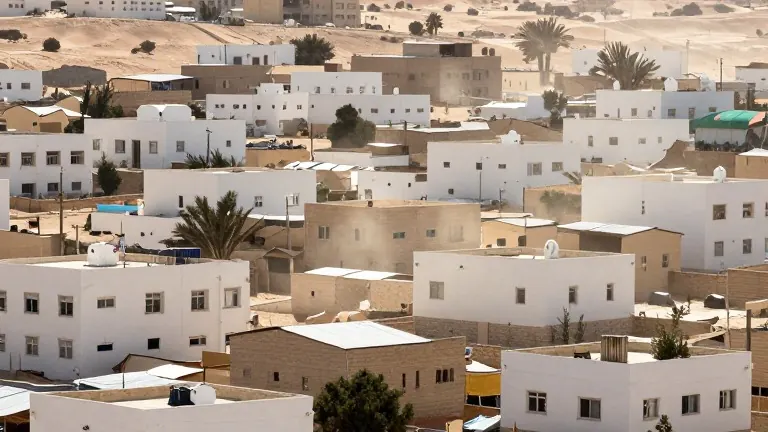
For the 20 percent of Israel's population that identifies as Palestinian, the general election on October 27 presents a specific calculation beyond choosing between Prime Minister Benjamin Netanyahu and former general Gadi Eisenkot. Finance Minister Bezalel Smotrich unveiled his party's plan in August to add one million Jewish residents to the Naqab and northern Israel. The proposal includes establishing 40 new settlements, dozens of farms, and hundreds of thousands of new housing units in areas where Palestinian communities are concentrated.
The plan aims to extend the model of territorial control from the occupied West Bank into regions within Israel's 1948 borders. Critics describe this process as recolonization, a trend that began in 2021 when religious-nationalist settler groups started establishing themselves in Palestinian neighborhoods in mixed cities like Jaffa and Lydd. Since October 2023, the pace of land seizure and settlement expansion has accelerated. Smotrich's specific goal is to Judaize the Naqab and the north, directly targeting the geographic distribution of Israel's Palestinian citizens.
This shift coincides with the expansion of state security apparatuses. National Security Minister Itamar Ben-Gvir issued 300,000 gun licenses since taking office. He also established the National Guard, a force intended to handle mass protests and internal security. The creation of this unit followed the May 2021 Dignity Uprising, which spread across Palestinian towns including Haifa and Umm al-Fahm. The government has integrated settler security squads into this broader framework, raising questions about the role of armed civilian groups in policing Palestinian neighborhoods.
Palestinian citizens hold formal citizenship, a status granted in 1952 after the Nakba of 1948. Despite this legal standing, they face discriminatory laws and systemic underfunding of basic services. The state has also outsourced part of its coercive power to criminal networks, which have obtained advanced weapons from army stockpiles or smuggled across borders. This dynamic has led to increased shootings, bombings, and arson in Palestinian communities, with law enforcement often responding slowly.
The United Arab List, led by Mansour Abbas, has long argued that supporting the anti-Netanyahu camp can halt the far right's agenda. However, the party's participation in the 2021 coalition government failed to produce fundamental policy changes for Palestinian citizens. In 2022, Ra’am member Mazen Ghnaim admitted he could not push through beneficial policies despite being part of the ruling government. This experience suggests that electoral victory for the opposition may not reverse the structures of discrimination.
Many Palestinian voters now question if voting can make a difference at all. The political mainstream continues to shift rightward, embedding nationalist attitudes into everyday life. For those who vote on Tuesday, the choice often centers on slowing this transformation rather than reversing it. The stakes are high, as another four years of far-right rule would pose an immediate threat to local rights and resources.
The election takes place on October 27, with 2 million Palestinian citizens eligible to vote. Smotrich's settlement plan remains a central issue in the campaign, directly affecting the land and political status of these voters. The outcome will determine whether the government continues its push to reshape the demographics of the Naqab and northern Israel.
Source: Al Jazeera