Protein Design: Natural Language Prompts Enter the Lab
Chinese researchers developed a tool that generates protein structures from text inputs, while Hugging Face announced a similar service for DNA design.
By Allison Singh ·
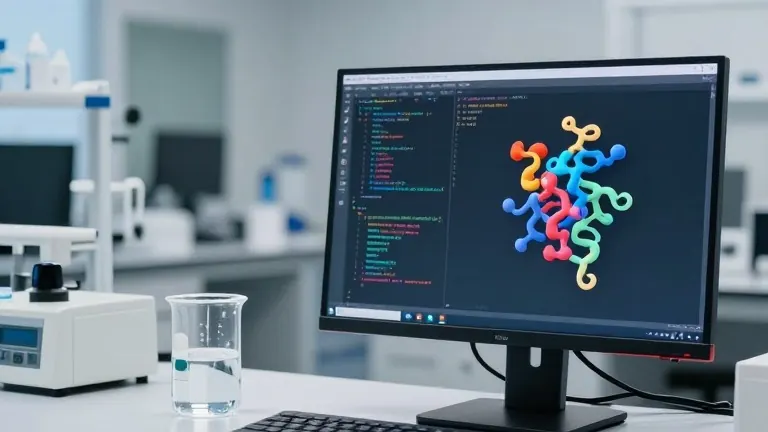
Researchers in China created a software tool that allows users to describe protein functions in plain English. The program generates protein designs based on these text prompts, removing the need for users to specify complex structural details like exact amino acid positions or water molecule interactions.
The tool aims to lower the technical barrier for designing biological molecules. Previously, users had to understand enzyme mechanisms and catalysis sites in detail before using existing design software. The new system handles these specifications internally, allowing for a more direct approach to creating functional proteins.
The development is part of a wider push to make molecular design more accessible. The team noted that while the success rate for producing a fully working protein from a single prompt may be low, the tool can still generate usable results. Users will likely need to test multiple generated designs to find one that performs correctly.
Around the same time, Hugging Face announced that it is now hosting a comparable tool. This new service applies the same natural language approach to DNA design. Both developments suggest a shift toward using simple text instructions for tasks that previously required specialized structural biology knowledge.
The Chinese research group collaborated on the project to bring this capability to a broader audience. The method resembles current trends in software development where simple prompts drive complex code generation. In the lab, this means scientists can request specific biological outcomes without manually coding the structural constraints.
The next step for these tools is integration into standard laboratory workflows. Users will need lab access to distinguish successful protein designs from the many failed attempts. The availability of these tools signals a move toward more intuitive interfaces for biological engineering.
Source: Ars Technica