Paramedics rescued photojournalist from rubble hours after colleague died
Zeinab Faraj survived a series of strikes in southern Lebanon that killed her reporting partner, Amal Khalil, and two men in a nearby vehicle.
By Hugo Konate ·
One hour. That is the estimated time gap between the death of Amal Khalil and the rescue of her colleague, Zeinab Faraj, from beneath a collapsed building in southern Lebanon.
The incident occurred on April 22, shortly after Israel and Lebanon agreed to a ceasefire in mid-April following a month of intense airstrikes. Faraj, a 21-year-old freelance photojournalist finishing a degree in radio and TV, traveled south to document the aftermath. She was joined by Khalil, a 42-year-old newspaper reporter who had contacted Faraj after seeing her social media work. The two had collaborated on previous assignments.
The group included two men from the city of Bint Jbeil: Ali Nabil Bazzi, a 27-year-old municipal official, and Mohammed Hourani, a 37-year-old friend of the mayor. The four had met at Tebnine governmental hospital, a location residents considered relatively safe. Bazzi was heading to sign a marriage contract that evening but insisted on joining the trip.
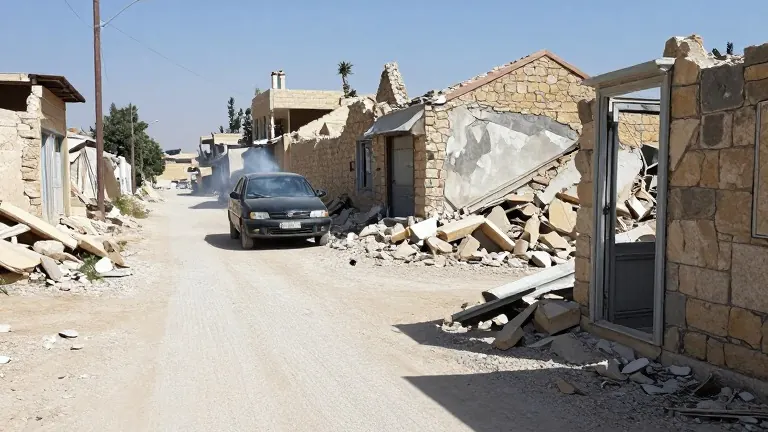
As the group approached the village of al-Tiri, a missile struck their vehicle. Faraj heard Khalil scream and saw the car engulfed in flames. The two women exited the vehicle. Faraj attempted to pull Bazzi from the wreckage, but Khalil indicated the men were gone. Faraj observed that their bodies were severely damaged.
Drones then descended at low altitude. Faraj described one hovering so close to her face that she tried to shield herself, only for it to rise again. Emergency services promised aid repeatedly, a reassurance Faraj said functioned "like an anaesthetic." A paramedic advised them to drive away because ambulances were blocked. As they moved toward their car, a missile struck the vehicle.
Both women were thrown backward. Khalil wrapped her arms around Faraj, hoping the drone would perceive them as dead. They took shelter in a nearby house. Khalil sustained bleeding on her face, hand, and leg and became immobile. Faraj sent a final text to her sister: "There's no hope left. Forgive me." Her phone died shortly after.
Faraj woke up trapped under rubble, struggling to breathe. A paramedic held her shoulders as a second worker cleared the debris. They extracted her while drones circled and a stun grenade was dropped nearby. In the ambulance, Faraj mistook the engine sound for a drone. At the hospital, nurses initially reassured her about Khalil’s status before falling silent.
The Israeli military stated it had identified saboteurs violating the ceasefire. Human rights groups labeled the attack a war crime, noting that the military received repeated requests to allow a rescue while the women sheltered. A military spokesperson had previously shared a video of Khalil, labeling her "terrorist media." Khalil had also received death threats from Israeli phone numbers. Faraj continues to struggle with walking and facial movement. She remains uncertain about returning to frontline journalism.
Source: The Guardian