NASA estimates 22 rocket launches needed for Moon landing
A new internal assessment suggests the Artemis mission will require significantly more propellant transfers than previously thought, raising concerns about the timeline.
By Jason Cooper ·
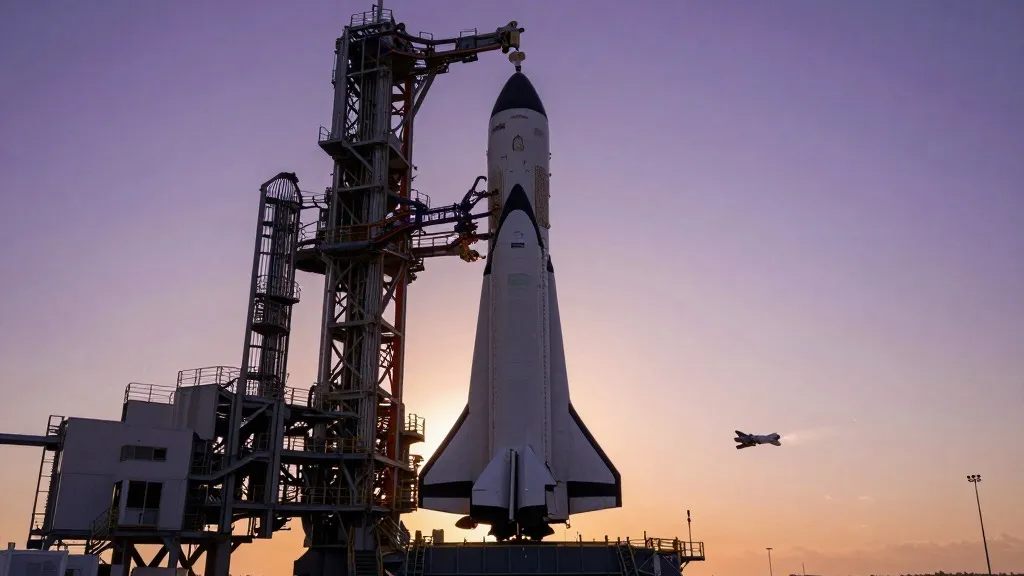
For average Americans tracking the progress of the Moon program, the most immediate change is a shift in expectations for how often rockets will launch from Texas. The agency has moved away from vague assurances toward a specific, higher number of flights required to make a crewed lunar landing possible this decade. This update provides a clearer, if more demanding, picture of the logistical hurdles ahead.
The central issue concerns the number of Starship launches necessary to fill a lunar lander with fuel in low-Earth orbit. NASA has historically been tight-lipped about this metric, often comparing its secrecy to how it handles nuclear codes. For years, the agency’s standard response has been that it does not know the exact figure and therefore would not commit to one. This reticence has made the number a moving target for observers and officials alike.
In 2023, Lisa Watson-Morgan, then the director of NASA’s Human Landing System, told reporters that the agency had a general idea but was reluctant to state it precisely. She later described the estimate as being in the high single digits to low double digits. That range implied roughly a dozen launches. Under that scenario, SpaceX would launch one depot vehicle and eleven tanker vehicles to load it with liquid oxygen and methane.
Other officials have previously cited figures in the high teens. The underlying hope was always that SpaceX would dramatically improve the lift capacity of the Starship rocket. Such an improvement would lower the number of tanker flights needed, making the mission more efficient and perhaps more feasible within the current decade.
However, concerns are growing among some NASA officials that these efficiency gains may not arrive soon enough. There is a fear that the Starship rocket may not play a meaningful role in returning humans to the Moon for NASA within this decade if the required improvements in performance are delayed.
A new estimate has emerged to address these uncertainties. On Thursday, the NASA Aerospace Safety Advisory Panel held its quarterly meeting. During the session, panel member Charlie Precourt, a former NASA astronaut, spoke about the risks associated with the Artemis Program and the challenges of landing humans on the Moon.
Precourt’s comments highlighted the complexities of in-space refueling. The process requires precise coordination between multiple vehicles in orbit. Any delay or failure in one tanker flight can cascade, affecting the entire schedule. The agency is now weighing these operational risks against the desire to maintain an aggressive timeline.
The shift to a higher number of launches reflects a more conservative approach to planning. By accounting for more flights, NASA aims to build in buffers for potential technical issues. This strategy acknowledges that the technology is still maturing and that real-world conditions may differ from simulations.
Open questions remain regarding the exact trajectory of Starship’s development. Whether the rocket will achieve the necessary lift capacity improvements in time is still uncertain. The agency continues to monitor progress while preparing for a more demanding launch cadence.
For now, the focus remains on executing the next steps of the Artemis Program. The new estimate serves as a benchmark for measuring progress. As the mission moves forward, every launch will be scrutinized for its contribution to the ultimate goal of sending humans back to the lunar surface.
Source: Ars Technica · original report published