20,000: Tesla’s New Weekly Target for Humanoid Robots
The automaker is ramping production to 20,000 units weekly, utilizing a novel 'Academy' system where thousands of robots generate training data to accelerate AI learning.
By Arjun Patel ·
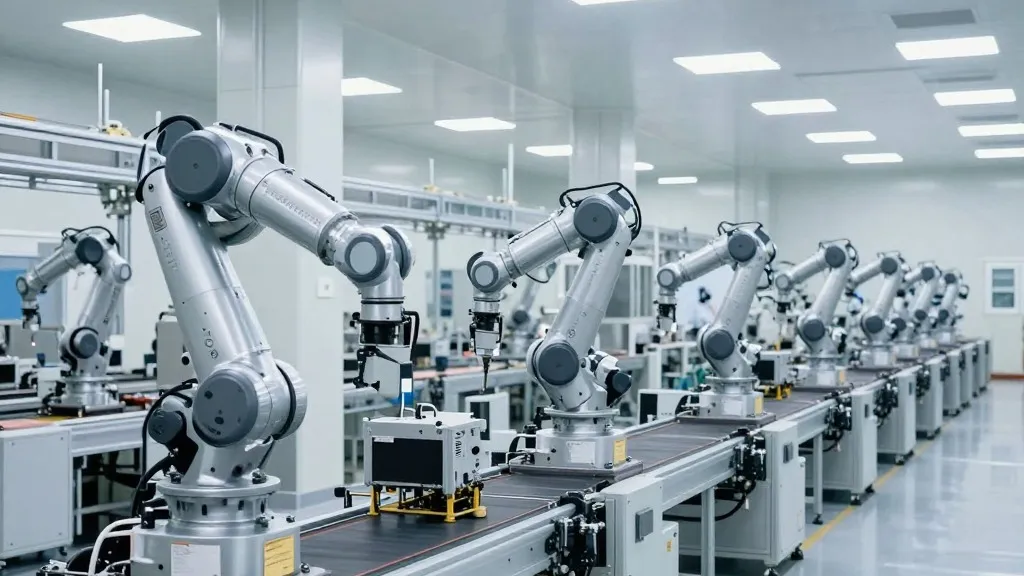
Tesla has officially initiated high-volume manufacturing of its Optimus humanoid robot, marking a critical shift from prototype to commercial product. In its third-quarter shareholder letter, the company confirmed that the units rolling off the new line at its Fremont factory are the first to meet strict production-quality standards. This milestone validates the current manufacturing process as suitable for a widely available commercial device, signaling the end of the early experimental phase.
The production capacity is designed to scale significantly, with a long-term annual target of one million units. Elon Musk stated on Wednesday’s earnings call that the majority of the necessary equipment is already installed in Fremont. As the line ramps up, output is expected to climb toward roughly 20,000 robots per week. Musk described this growth trajectory as a classic S-curve, noting that the initial slope is shallow but will steepen as the system matures.
The physical space for this production was carved out of the former Model S and Model X assembly area. Tesla cleared that legacy vehicle line in just 46 days to make room for the robot-focused facility. The team is currently refining the robot’s artificial intelligence, electromechanical design, and service life, with Musk expecting this developmental work to be completed by the end of next year. At that point, Tesla plans to begin delivering Optimus units to outside companies for dangerous, repetitive, and around-the-clock tasks.
A major technical challenge addressed on the call is the lack of a large fleet to generate real-world training data, a key advantage Tesla’s cars possess. To solve this, the company is implementing an "Optimus Academy," a system where 10,000 to 20,000 robots will practice various tasks and feed their learned behaviors back into the model. Every robot produced becomes a data source for the next iteration, effectively allowing the robots to teach themselves through collective practice.
Hardware upgrades are also imminent. Tesla intends to integrate its AI5 chip into Optimus units next year. Musk indicated that a new video demonstrating the robot completing tasks driven by AI rather than preprogrammed motions will be released within one or two months. He contrasted this with rival humanoid demos that rely on scripted routines, arguing that such approaches would not hold up in real-world environments.
The supply chain is aligning with this expansion. In September, Tesla certified Tuopu, Joyson, and Sanhua as mass-production partners for key components. Simultaneously, a much larger dedicated factory is under construction at Giga Texas, with drone footage showing the steel frame nearing completion. Musk has pegged that facility’s long-term target at 10 million robots per year, underscoring the massive scale of the operation.
Cost controls remain a priority, with executives noting that Optimus production costs are trending toward the expected manufacturing cost of the Cybercab. The robot’s hands remain the most complex engineering challenge, a point Musk highlighted at the recent X Takeover event. Current engineering efforts are heavily focused on resolving the intricacies of the hand design to ensure reliability at scale.
Source: Teslarati