1894 Press War Exposed How Print Media First Amplified Antisemitic Slander
A new London exhibition features rare posters and newspapers that defined the Dreyfus affair, revealing the mechanics of the first mass-media prejudice scandal.
By Allison Singh ·
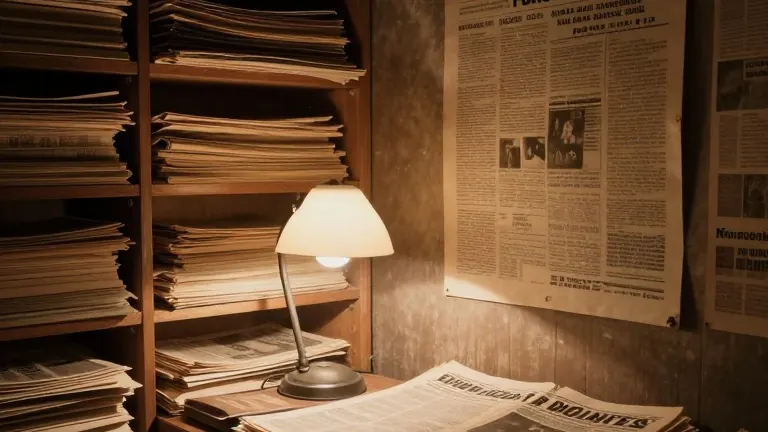
The Wiener Holocaust Library in London is displaying a collection of rare documents that detail the 1894 Dreyfus affair, the event co-director Barbara Warnock described as the world's first experience of antisemitism gone viral. The exhibition, which opens this week, presents nearly 40 items including posters, journals, and newspaper specials that fueled a national dispute over the wrongful conviction of Alfred Dreyfus.
Dreyfus, a 36-year-old French army captain, was sentenced for treason in 1894. The verdict triggered a fierce public debate between those who insisted on his guilt based on his Jewish identity and those who defended his innocence. This conflict occurred at a time when French censorship laws had recently been lifted and printing technology allowed for rapid mass distribution of polemical literature.
Clara Dijkstra, a curator for the exhibition, noted that the visual materials from the era were designed to strip Dreyfus’s defenders of their humanity. One prominent exhibit is a large poster depicting Arthur Ranc, a leftwing politician and newspaper editor who supported Dreyfus, as an alligator-like creature with razor-sharp teeth. Dijkstra explained that the series, titled Musée des Horreurs, was published from autumn 1899 to 1900. Approximately 45 to 50 versions of these posters existed, all targeting key figures who advocated for Dreyfus’s exoneration.
The government eventually intervened after one year of publication, deciding the imagery was too grotesque and shutting down the series. Dijkstra stated that the primary goal of these illustrations was to dehumanize the people arguing for Dreyfus’s innocence. The exhibition also includes a copy of La Libre Parole, a rightwing newspaper founded by Édouard Drumont, the initiator of the Antisemitic League of France. Drumont’s paper was the first to report on Dreyfus’s guilt, effectively breaking the story and reaching a large circulation with covers featuring striking antisemitic imagery.
The collection also holds an English-language perspective on the crisis. The only such item in the Wiener collection is a 45-page special edition of the weekly illustrated newspaper The Graphic. Its front page featured the headline Dreyfus the martyr above an image of his arrest. Dijkstra observed that this publication focused less on the underlying antisemitism and more on the miscarriage of justice, framing the events as a courtroom drama that captured widespread attention.
The political fallout extended to literary figures, most notably novelist Émile Zola. In 1898, Zola wrote an open letter to French President Félix Faure titled J'Accuse. In it, he accused the French government of antisemitism and a cover-up. Zola was later convicted of libel and fled to England. A journal published in France specifically to cover the affair included an image of a Prussian officer pulling the strings of a mask of Zola’s face. Behind the mask was a caricature of a Jewish man, implying a German conspiracy behind the defense of Dreyfus.
The Wiener Holocaust Library was founded by Alfred Wiener, who fled Germany for the Netherlands in 1933 and then escaped to London in 1938. He brought with him an extensive collection of documents chronicling the rise of antisemitism. The current exhibition includes pieces Wiener sourced himself, as well as materials collected by the library over the intervening decades. A portion of the display is on long-term loan from Birkbeck, University of London.
The exhibition is titled J'accuse! Press, Polemic and the Dreyfus Affair. It runs from November 5 to March 19 at the Wiener Holocaust Library.
Source: The Guardian