San Diego Reverses Water Rates to Penalize Low Consumption
City council approves a 14.5% rate hike that raises costs for efficient households while cutting bills for golf courses and high-usage homes to satisfy a court order.
By Hugo Konate ·
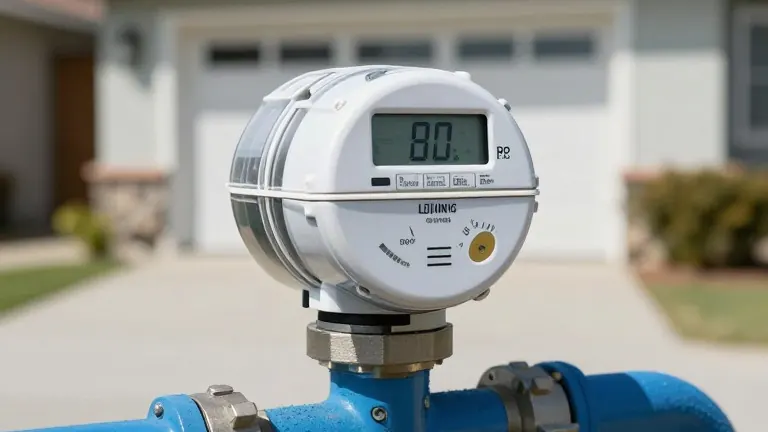
A 14.5% overall increase in water rates for San Diego residents will take effect on January 1, 2027, according to a vote approved by the city council on Tuesday. The new structure reverses the traditional financial incentive for saving water. Households that use the least amount of water will see their monthly bills rise by $5.62, a 7.1% increase. In contrast, single-family homes with high water usage, typically those with large lawns or swimming pools, will see their monthly costs drop by $19.52, a 5.9% decrease.
The shift is designed to comply with a state court ruling that declared San Diego’s previous tiered rate structure illegal. The ruling stated that the city failed to prove that serving low-volume customers was cheaper than serving high-volume customers. Under the new model, apartments and condominiums will also see reductions in their bills. A 10-unit building will pay $15.17 less per month, while a 250-unit complex will see a monthly reduction of $353.52. Irrigation customers will save $48 per month, representing a 6.7% cut.
Council members expressed frustration with the judicial mandate, which they said forced the city to abandon a system that had rewarded conservation for decades. Councilman Sean Elo-Rivera described the change as a punishment for citizens who made greater efforts to reduce water use. He noted that the city was being compelled to reward those who ignored 30 to 40 years of conservation initiatives. Elo-Rivera emphasized that the change is a court order rather than a political decision.
The council voted 6 to 2 to approve the new rates. Councilman Kent Lee and Councilman Henry Foster cast the opposing votes. Councilwoman Marni von Wilpert was absent from the meeting. Lee, Foster, and von Wilpert are the only council members appearing on the ballot for the November 3 election. Lee criticized the 14.5% hike, arguing that such increases disproportionately affect residents who live paycheck to paycheck.
City officials stated that they will not use a new state law to immediately restore conservation incentives. Assembly member Chris Ward introduced AB 2180, which Governor Gavin Newsom signed into law on September 27. The legislation modifies the implementation of Proposition 218, the state measure cited by the court to strike down San Diego’s tiered rates. AB 2180 allows water agencies to set rates based on general user characteristics, such as property size and the number of plumbing fixtures, rather than precise cost calculations for each property.
Lisa Celaya, the city’s deputy executive director of utility services, told the council that San Diego does not plan to utilize AB 2180 before 2030. The city is currently conducting a detailed and expensive rate analysis for 2028 and 2029, which is expected to be completed in February. Celaya argued that starting a new tiered rate system now would be inefficient given the ongoing work. She also noted that the California Supreme Court is reviewing the case of Dreher v. City of Los Angeles Department of Water and Power, which involves fundamental issues regarding tiered rates.
The Supreme Court has recently raised questions about the application of AB 2180. Celaya stated that the court has requested briefs on how the law will be implemented. The city intends to wait for the outcome of the Dreher case before considering the reintroduction of conservation-based pricing. Council President Joe LaCava supported this cautious approach, describing it as legally prudent. He advised officials to let the courts determine if the new law applies in the manner the city hopes.
The rate adjustments affect 286,000 customers across San Diego, Coronado, Imperial Beach, and Del Mar. The city received 3,644 protests against the new rates. This number is well below the 50% threshold required to overturn the council’s decision. City officials agreed to explore a subsidy program for low-income users affected by the hike. Funds for the program will come from non-water revenue sources, including the leasing of utility-owned land and the installation of solar panels on city facilities.
Source: The San Diego Union-Tribune