NOAA: Strong El Niño to Drive Warmer, Wetter Winter
The National Oceanic and Atmospheric Administration predicts above-average temperatures and precipitation across much of the U.S. due to a historic climate pattern.
By Hugo Konate ·
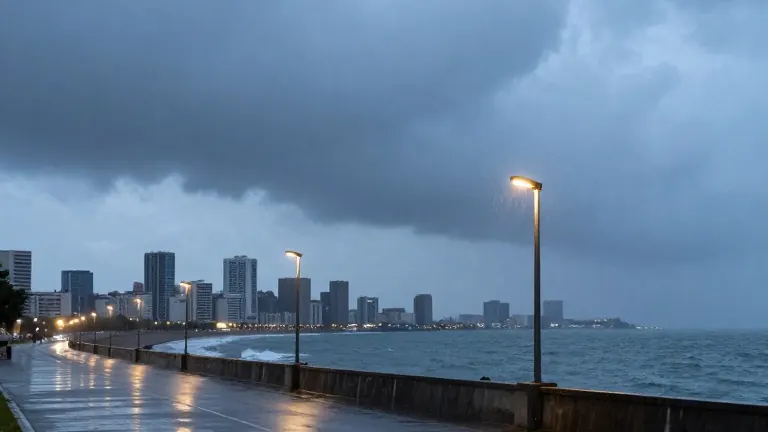
The National Oceanic and Atmospheric Administration projects that a powerful El Niño event will drive above-average temperatures and precipitation across much of the continental United States this winter. Meteorologists describe the current atmospheric conditions as potentially the strongest on record. The agency’s latest outlook indicates that this pattern will reshape global weather, bringing specific risks to coastal and inland communities alike.
Ken Graham, director of NOAA’s National Weather Service, characterized the incoming event as a strong, if not historic, El Niño. He noted that seasonal predictions allow communities to assess risks and make earlier decisions, a process that saves lives. Forecasters emphasize that these outlooks represent odds rather than certainties, as the climate pattern tilts conditions in specific directions without guaranteeing exact outcomes.
The pattern originates in the tropical Pacific, where warm water releases heat into the atmosphere. NASA climate scientist Josh Willis compared the event to Godzilla, noting that it breathes fire on Indonesia and Southeast Asia, causing drought and wildfires, while its tail stirs storms and high tides on the American Pacific coast. This natural event is occurring alongside warming driven by fossil fuel emissions, which complicates regional forecasts.
On the West Coast, Northern California is expected to be warmer, while the rest of the state will see above-average precipitation. Parts of Nevada, the southern Rockies, and California’s San Bernardino Mountains may receive more snow. A Kelvin wave reached the coast in early October, contributing to coastal flooding from Tropical Storm Rachel. Another wave was off the coast between Los Angeles and San Francisco in late October, with more expected through early winter.
The Southwest has already experienced wetter conditions. Severe flooding in the Four Corners region in late October forced rooftop rescues and evacuations after two months of unusual rain. Climate scientist Daniel Swain attributed the flooding to the El Niño and record-warm waters off the West Coast. He stated that the marine heat wave is largely due to human-caused climate change and that the rain will not resolve the Colorado River basin's water crisis. Lake Powell and Lake Mead remain at record lows.
In the Northeast and Mid-Atlantic, forecasters anticipate warmer and wetter conditions similar to the record-setting El Niño of 2023. Studies suggest the pattern can increase nor'easter frequency by pushing warm, moist air northward. Snow remains possible, as a strong El Niño in 2016 produced a blizzard with more than 30 inches of snow and 60 mph gusts. Graham said the pattern does not erase the risk of heavy snowfall.
The South has the highest chance of above-average precipitation. NOAA meteorologist Jon Gottschalck said snow could reach areas that rarely see it, including northern Texas. Northern Florida and southern Georgia and South Carolina have the highest odds of a wetter winter in the continental U.S. Florida’s tornado risk is typically higher in El Niño years, and a 1998 outbreak in Central Florida killed 42 people.
The Midwest, particularly the Upper Midwest, is expected to experience warmer temperatures and a smaller snowpack. Michigan, Ohio, and Indiana tend to be drier during El Niño winters, while Iowa tends to be wetter, according to the U.S. Geological Survey. Gottschalck said drought is expected to persist across the region this winter, with concern growing that it could worsen.
Source: NPR
More News · National news · Report a business · Got a Story?